Cities, as population, culture and economics centers, need vital infrastructure to maintain the quality of life of their inhabitants. One of the most important, yet overlooked, these infrastructure is the municipal waste management system. At the center of the system is a simple but vital element called the "municipal trash". But behind this simple product, there is a complex and industrial process that peak in a municipal trash production plant. Not only do these factories produce waste collection, they also play a key role in public health, visual beauty of the city, and even culture in waste separation.
The importance of a modern and well -equipped municipal waste plant is beyond just production. Using up -to -date technology, high quality raw materials and engineered designs, these industrial centers offer products to the community that must be resistant to various atmospheric conditions (from scorching sun to snow and rain), potential kicks and continuous use of citizens.
Choosing a valid municipal waste production plant guarantees long -term investment for municipalities and organizations responsible for creating a cleaner and healthier city. In this article, we will examine the comprehensive processes, standards and critical role of these factories in urban management.
Types of Municipal Waste Bins and Factory Production Process
The variety of needs in different urban spaces has led to the production of different types of waste buckets. Each leading municipal waste factory offers a variety of products to meet these needs. In general, these products are divided into two main categories of metal and polyethylene.
1. Metal trash bin: Symbol of durability and strength
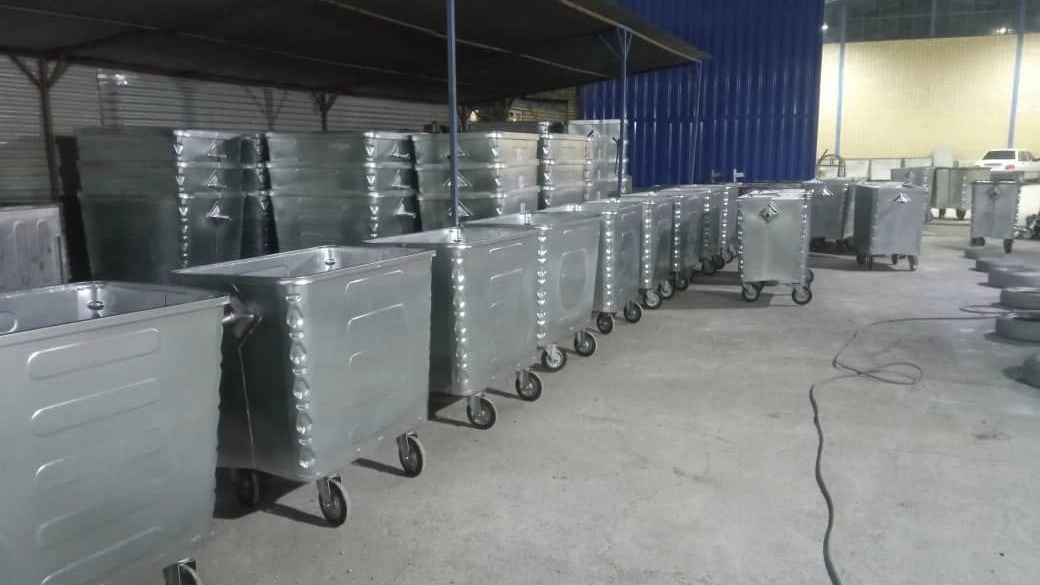
Metal buckets, especially those made of galvanized sheets, are an ideal option for highways, parks and business centers due to their high resistance to impact, fire and environmental conditions. The production process in a municipal trash production plant for this type of product includes the following steps:
- برشکاری و فرمدهی: ورقهای گالوانیزه با ضخامت استاندارد (معمولاً بین ۱.۵ تا ۲ میلیمتر) توسط دستگاههای گیوتین برش خورده و سپس با استفاده از دستگاههای نورد و پرس، به شکل استوانهای یا مکعبی فرم داده میشوند.
- جوشکاری: قطعات مختلف بدنه، درب و پایهها با استفاده از جوشکاری CO2 به یکدیگر متصل میشوند. این نوع جوشکاری، اتصالی محکم و یکپارچه ایجاد میکند که در طول عمر محصول حیاتی است.
- پوشش رنگ: این مرحله نقشی کلیدی در زیبایی و افزایش مقاومت سطل در برابر زنگزدگی دارد. بهترین روش، استفاده از رنگ کورهای الکترواستاتیک است. در این فرآیند، پودر رنگ به صورت یکنواخت روی سطح پاشیده شده و سپس سطل وارد کوره با دمای بالا میشود تا رنگ پخته و تثبیت گردد. این پوشش، سطحی صاف، براق و بسیار مقاوم ایجاد میکند. یک کارخانه تولید سطل زباله شهری معتبر مانند سالار صنعت ملارد، بر کیفیت این مرحله تاکید ویژهای دارد.
1. Polyethylene trash bin: Modern flexibility and efficiency
Polyethylene buckets (HDPE) have quickly found their place in the waste management system due to their lower weight, chemical and acidic resistance, the ability to produce in a variety of colors and more affordable prices. These buckets, especially in large wheeled dimensions (garbage tanks), are the spine of waste collection in cities. The production process at the municipal trash production plant is quite different for these models:
- آمادهسازی مواد اولیه: گرانولهای پلیاتیلن سنگین با چگالی بالا به همراه افزودنیهایی مانند آنتی-یووی (Anti-UV) برای مقاومت در برابر اشعه فرابنفش خورشید، در دستگاه میکسر ترکیب میشوند.
- تزریق پلاستیک: این مخلوط وارد دستگاه تزریق پلاستیک غولپیکر میشود. مواد ذوب شده با فشار بسیار بالا به درون قالبهای فولادی که شکل نهایی سطل را دارند، تزریق میشوند.
- خنکسازی و خروج از قالب: پس از تزریق، قطعه درون قالب خنک میشود تا شکل خود را حفظ کند. سپس قالب باز شده و سطل زباله به صورت یکپارچه از آن خارج میگردد.
- مونتاژ نهایی: در این مرحله، قطعات جانبی مانند چرخها (که معمولاً از لاستیک توپر برای دوام بیشتر ساخته میشوند) و محور فلزی به بدنه اصلی مونتاژ میشوند.
A advanced municipal waste manufacturing plant, with precise control of temperature, pressure and time in the injection process, produces a uniform product, without cracking and standard thickness in all parts.
Importance of Design and Production Standards in the Trash Factory
It is not enough to produce a container for waste storage. A municipal trash production plant must provide a product that has the necessary standards in terms of ergonomics, safety and efficiency.
ergonomics and ease of use: The height of the bucket should be suitable for all citizens, including children and the elderly. The bucket door (if any) should be easily opened and closed. In wheel models, the handles should be properly designed to make the mechanized discharge by waste machines.
Safety and Health: The design should be such that it prevents the accumulation of rainwater inside or on the bucket. The sharp and winning edges must be completely removed. The inner and outer surface of the bucket should be smooth and smooth to make it easy to wash and disinfect and prevent contamination. These are on the agenda of any reputable municipal waste manufacturing plant.
Resistance and Lotual: As mentioned, the use of high quality raw materials, adequate thickness, standard welding and furnace color coating in metal buckets, and the use of high density polyethylene and protective additives in plastic buckets guarantees the long life of the product. A municipal trash production plant such as Salar Industry Mallard, by understanding this, gives the quality of raw materials a top priority.
Visual beauty and harmony with urban furniture: trash bin is part of urban furniture. Beautiful design and color selection can help the beauty of the environment instead of creating an unpleasant view. A modern municipal waste production plant is capable of producing products in a variety of colors and designs to coordinate with other urban elements.
The Role of Municipal Trash Production Factory in Culture
may not have a direct relationship between an industrial unit and the culture of the community at first glance, but an municipal trash production plant can play a key role in promoting a culture of separation from the source. These factories provide the necessary tools for implementing waste separation projects to municipalities and citizens by producing waste bins in different and standard colors (eg water for paper, green for more waste, yellow for plastic and metals). Installing these colored buckets in passages, parks, schools and residential complexes visually and practically teaches the importance of separation to the community. Therefore, the output of a municipal trash production plant beyond a physical product is a cultural tool.
challenges and future ahead of the trash production industry
This industry, like any other area, faces challenges. These challenges include the price fluctuations of raw materials (metal and petrochemical materials), the need for high investment to produce modern machinery and competition in the market. However, the future of this industry looks bright.
With the increasing urban population and increasing attention to environmental issues, the need for more efficient waste management systems and, as a result, more quality products are felt. The trend towards "smart cities" pushes the municipal trash plant to innovation. One of these innovations is the production of smart buckets equipped with a high -level surface detection sensors that inform the control center. This technology helps to optimize waste collection routes, reduce waste vehicles and, as a result, reduce costs and air pollution.
Salar Industry Mallard: A clever choice for municipal waste management
Among the mass manufacturers, the selection of an municipal trash production plant that puts the commitment to quality, innovation and customer satisfaction is vital. Salar Sanat Mallard Company has been recognized as one of the pioneers of the industry in the country with years of brilliant experience in the production of all kinds of urban furniture, especially metal and polyethylene waste buckets.
This collection offers products that meet all qualitative and design standards by utilizing up -to -date technical knowledge, advanced machinery and expert team. The focus of the Mallard Industry on the use of first -class raw materials, the furnace electrostatic color coating for metal products and heavy polyethylene for retrofitted for plastic products guarantees the durability and high performance of the company.
If you are looking to equip your urban space with products that are both highly and aesthetically high, Salar Industry Mallard is a reliable and reliable option for you. This municipal trash production plant is ready to cooperate with municipalities, villagers, organizations and residential complexes throughout the country by providing specialized consulting and basket of products.
Conclusion A municipal waste production plant is not merely a production unit; Rather, a strategic partner for city managers to build a cleaner, healthier and more beautiful society. From cutting the first sheet of metal to the last plastic granule injection, all production steps are designed to improve the quality of urban life.
Investing in high quality products from a valid municipal waste production plant, investing in the health and future of the city. With the right and clever selection, one can take a big step towards improving health infrastructure and upgrading urban landscape, which is a goal in which collections such as Salar Industry are trying to achieve.